Fox Thermal Instruments


Get A Quote

Frequently Asked Questions

In what industries are Fox Thermal Flow Meters used?

What types of gases do the meters measure?

How do I know which meter is right for me?

How accurate are the meters?

What conditions can the meter safely operate in?

What are the probes constructed of?

What is the minimum flow rate that your sensors can measure accurately?

What size pipes can your meters measure in?

What are the advantages of a remote unit?

What advantages do Fox meters offer over competitors?

How do liquids, oil, or “wet gas” in the stream affect the meter?

How often is calibration required?

Is it portable?

Can we connect it to a SCADA system?

Can it help us with reporting emissions to the EPA on a monthly or quarterly basis?

Can the meter handle pulsations?


Can't find your question listed above, then click here to contact to a Fox Thermal Specialist. Someone will get back to you as soon as possible. Thank you for your interest in Fox Thermal Instruments.

printer friendly version


In what industries are Fox Thermal Flow Meters used?

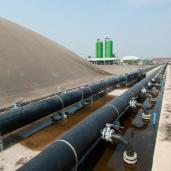
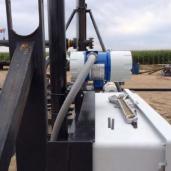
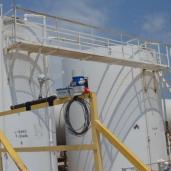
Fox Gas Mass Flow Meters measure the mass or weight of gas molecules flowing through a pipe. Fox meters can measure virtually any gas flow in a wide variety of applications. Today, almost any facility will have either a process or HVAC boiler – in many cases both. Depending on boiler capacity, Fox Flow Meters should be used on both the fuel and air intake lines. Note that the EPA is currently finalizing rules to cut boiler emissions -- measuring the gas intake for larger capacity boilers will become mandatory. Another common application for Fox meters is monitoring factory compressed air lines for losses. It is safe to say that there will always be leaks in a compressed air system, the question is just how severe the losses will be (many companies report losses in the hundreds of thousands of dollars annually). Ideally, a Fox Flow Meter should be installed on each compressor upon commissioning. This allows the factory manager to establish a baseline air usage for a given level of activity. Any deviation from this baseline -- without any corresponding change in the work load -- suggests a system leak. For existing facilities, maintenance personnel can detect air leaks using a portable ultrasonic device. With the Fox meters installed, maintenance personnel can then determine baseline air usage when the system is functioning properly. Any subsequent spike in compressor output, indicates new system leaks. Other Fox applications include emissions monitoring, process heating, vent gases, flare gases, laboratory gas metering, and biogas flows.

BACK TO TOP


What types of gases do the meters measure?

Fox meters can be used to measure a wide range of pure gases and gas mixtures. These include:

Air
Compressed Air
Ammonia
Argon
Butane
Chlorine Gas
Carbon Monoxide
Carbon Dioxide
Digester Gas
Ethane
Flare Gas
Flash Gas
Fuel Gas
Helium
Hydrogen
Methane
Natural Gas
Nitrogen
Oxygen
Propane
Vent Gas
Mixed Gases

BACK TO TOP


How do I know which meter is right for me?

There are two types of Fox meters: insertion and inline. Insertion will work in the vast majority of applications, but when the pipe diameter is less than 1.5 inches (37mm), install an inline version. More details can be found on the Fox website. Because the inline model includes flow conditioners to control the flow profile, less upstream and downstream straight pipe is required. Note that insertion meters require a straight pipe run that is equivalent to 15 pipe diameters in length upstream from the meter -- and 10 diameters downstream. For an inline meter, the corresponding figures are 8 and 4 diameters respectively.

BACK TO TOP


How accurate are the meters?

To ensure that all Fox meters meet specified performance parameters and provide accurate, repeatable measurements, all calibrations are performed to NIST-traceable flow standards. Furthermore, all calibration equipment is subject to a meticulous metrology program that includes the selection, control and maintenance of measurement standards.


Flow Accuracy: ± 1% of reading ± 0.2% of full scale
Flow Repeatability: ± 0.2% of full scale
Flow Response Time: 0.9 seconds (one time constant)
Temperature Accuracy: ± 1.8° F (± 1.0° C) over -40 to 250° F (-40 to 121° C); ± 3.6° F (± 2.0° C)
(FT2 Model only)
over 250 to 650° F (121 to 343° C); Minimum velocity 50 SFPM.

BACK TO TOP


What conditions can the meter safely operate in?

The Fox 10A meter is FM and CSA approved for Class I, Division 1, Groups B, C, and D hazardous areas. The FT2 is FM and FMc approved for Class I, II, III, Division 2, Groups A, B, C, D, E, F, G, T4A harzardous locations.


BACK TO TOP


What are the probes constructed of?

The standard probe is made of 316 stainless steel. For extremely corrosive environments, Hastelloy C-276 is the preferred option.


BACK TO TOP


What is the minimum flow rate that your sensors can measure accurately?

Minimum and maximum flow rates are 50 and 50,000 SFPM.


BACK TO TOP


What size pipes can your meters measure in?

One quarter inch (6.5mm) is the smallest Fox inline meter and can measure as low as 0.035 SCFM (0.055 NM3/H). Special length probes are available for measuring exhaust gases in large ducts.


BACK TO TOP


What are the advantages of a remote unit?

A remote unit separates the sensor from the meter electronics. One advantage of a remote FT2 unit is that the sensor can be installed in a Division 1 area, while electronics are mounted in a Division 2 area.


A remote unit should also be used in an area with ambient temperatures above 140°F (60°C) and in areas where vibration is an issue.


BACK TO TOP


What advantages do Fox meters offer over competitors?

The Fox PowerPro™ sensor offers higher accuracy and a wide turndown ratio of 100:1. It can operate in velocities up to 50,000 SFPM – almost twice that of competitors units – while still performing accurately in very low flow applications, as well.


BACK TO TOP


How do liquids, oil, or “wet gas” in the stream affect the meter?

Fox meters operate in all types of gases, but a thermal mass flow meter is not designed to measure liquid or steam flows. The gas can be “wet” -- so long as it is non-condensing. Droplets forming on the sensor element will affect its reading and may cause the meter to display an error code.


To lessen the chance of moisture forming on the tip, the meter can be installed from underneath the pipe. This allows any moisture to flow downwards, away from the tip, due to gravity.


BACK TO TOP


How often is calibration required?

In the case of monitoring emissions for EPA regulation requirements, the EPA states that calibration for Thermal Mass Flow Meters must be performed per manufacturer specifications. For most industrial applications, Fox recommends calibration biennially.


The Fox calibration lab maintains a database on every meter. Calibration files include details on process conditions, calibration fluid, line size and other relevant information. All NIST-traceable equipment utilized for the calibration procedure is identified, as is the calibration history of all reference equipment.


BACK TO TOP


Is it portable?

Yes. Many users will move the meter around the plant when conducting compressed air surveys or energy audits.


BACK TO TOP


Can we connect it to a SCADA system?

Yes. RS232 is standard in the FT2 model. In addition, RS422/RS485 Modbus, Profibus-DP, DeviceNet and Ethernet Modbus TCP are available communication interface options.


The 10A model comes with a single mA output for flow and an alarm relay.


BACK TO TOP


Can it help us with reporting emissions to the EPA on a monthly or quarterly basis?

Yes. All Fox meters are EPA compliant for emissions monitoring applications.


BACK TO TOP


Can the meter handle pulsations?

Yes. With a 0.9 second response time, the Fox meter can quickly react to fluctuations in the gas stream.


BACK TO TOP


ft2 ft2 & 10a


Customer Satisfaction Survey
Get Our Newsletter

 
Fox Thermal Instruments, Inc. 399 Reservation Road | Marina, CA 93933 | Phone: (831) 384-4300 | Fax: (831) 384-4312 | Copyright 2005-2012 visa mc